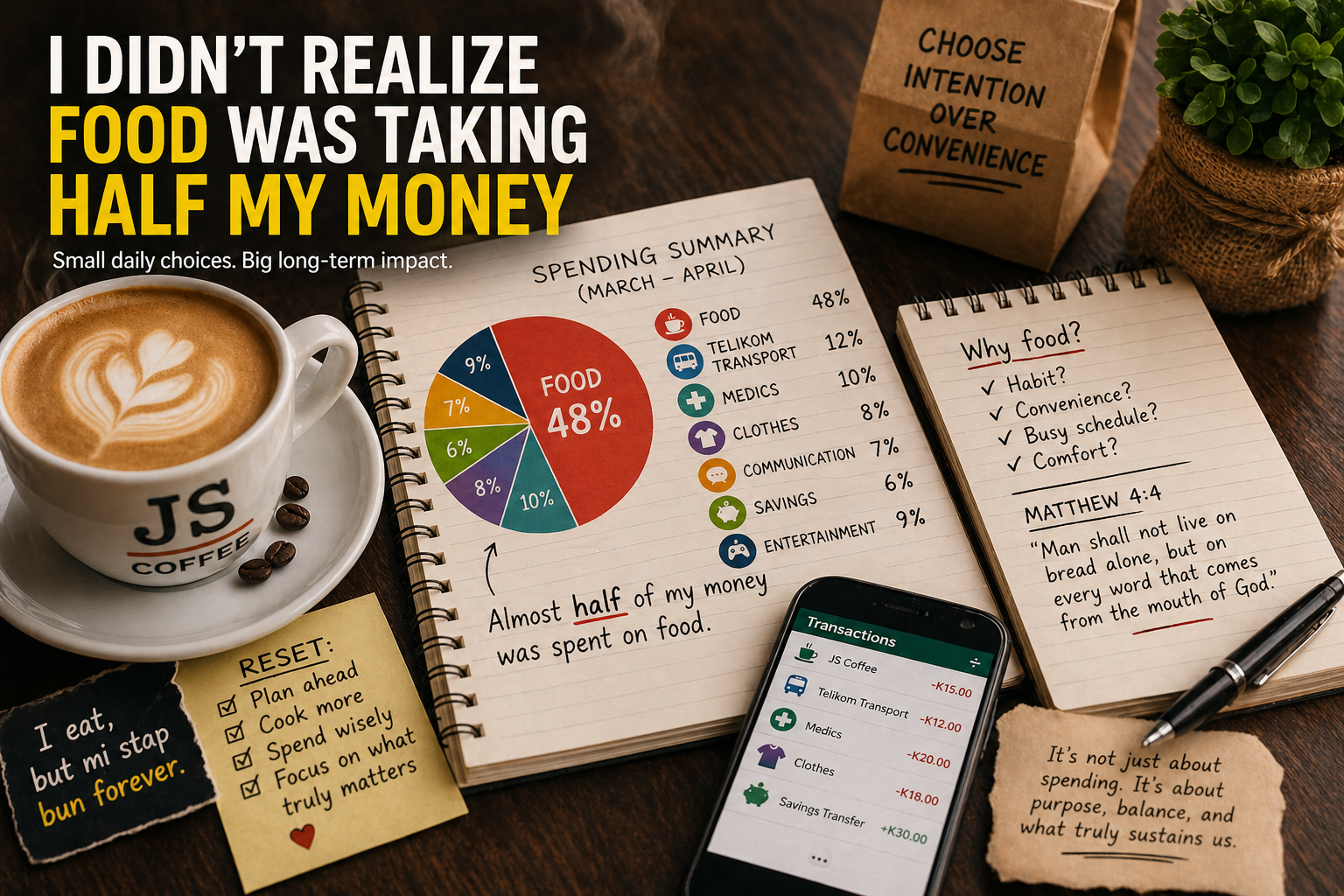
Yesterday, I sat down and did something I don’t usually do carefully with much attention. I reviewed my bank statements from March to April in detail.
At first, I was just scrolling. Nothing unusual. Just transactions here and there. Then I started noticing a pattern. Every micro spending was on Food. Food again. Food again. By the time I reached the end of the statement, I had to pause. Almost half of my money was spent on food.
It didn’t make sense. I wasn’t going to expensive restaurants often. I wasn’t hosting events or going out frequently. It was just everyday spending—small amounts, repeated daily.
So I decided to go deeper. I exported my transactions into a CSV file and decided to do further data cleaning and analysis. I grouped them into categories: food, savings, transport, communication, medical, clothing, and entertainment, and compute the sum for each category. That is when it became clear. Food was leading everything.
Later, I mentioned it to a colleague while we were on the road and said, “I eat, but mi stap bun forever.” We laughed—but the statement stayed with me. Because it was true.
I was spending consistently on food, yet still not feeling satisfied in my soul and spirit. It felt like no matter how much I spent, I was not moving forward—only maintaining a cycle.
At some point, I started to question it more deeply. It felt as though everything I worked for was going back into food, just to satisfy the stomach. Is this really what my effort is meant for? Is this worth it?
I began to question myself and the direction of my habits. Because even though my basic needs were being met, something inside me still felt unsettled.
This led me to ask a simple but uncomfortable question: Why food? Was it really hunger? Or was it convenience, routine, or a response to a busy schedule?
As I reflected further, I realized something else. For me, eating out often feels more affordable and convenient than buying groceries and cooking. After a long day, it is easier to buy something ready-made than to plan, shop, and prepare a meal.
In the short term, it even feels cheaper. But there is a hidden cost. Not just financially over time, but physically and personally. By choosing convenience repeatedly, I may be missing out on the healthier side of food—home-cooked meals, better nutrition, and more control over what I consume. So while I thought I was saving time and money in the moment, I may actually be paying in other ways that might impact my life in the long run.
Then I remembered the words of Jesus in Matthew 4:4:
“Man shall not live by bread alone, but by every word that proceedeth out of the mouth of God.”
This time, it felt very practical. This statement does not deny or dismiss the importance of food, but it places it in perspective. Life is not sustained by physical consumption alone. There is a deeper need: spiritual nourishment, discipline, and purpose.
I realized I had built a strong habit around feeding my body—but not the same level of discipline in managing my resources or focusing on what truly sustains me. This is not just about food. It is about patterns.
Small, daily decisions that seem normal can quietly shape our financial life. Without reflection, we continue the cycle without questioning it.
For me, this is a great reflection for check and balance:
To be more intentional.
To plan instead of reacting.
To reduce unnecessary spending.
To balance convenience with health and long-term value.
More importantly, it is a reminder that life is not just about daily consumption but about direction. Reviewing my spending showed me more than numbers. It revealed habits I had normalized and priorities I had not questioned.
And perhaps the real question is not just how much we spend on food, but why we spend the way we do.
Because at some point, we have to ask ourselves:
Are we just maintaining a cycle, or actually moving forward?
Let me know in the comments how you manage your spending on food, or what changes you are planning to make.

Comments are closed